
Despite the threat of a pull-out over the fiasco involving match-referee Andy Pycroft, it is understood that PCB is trying to work out a respectable solution by which Pycroft doesn't officiate in their matches.

India has proposed February 18 and 25 to Pakistan as the dates for foreign secretary-level talks as part of a "practical and pragmatic" approach to seek redressal of its core concern of cross-border terrorism but warns that there will be a huge setback if a 26/11-type terror attack is repeated.
Asked whether the frozen peace process would restart as the NAM summit at Havana was around the corner, Singh replied that it was too early to say if it would happen.

'India's letter to Pakistan on April 24 (2025; two days after the Pahalgam terrorist attack) didn't tear up the treaty -- but it did put it on ice.'
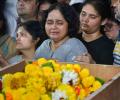
The US has issued a 'Do Not Travel' advisory for Jammu and Kashmir citing potential for terrorist attacks and violent civil unrest. The advisory, issued on Wednesday, comes a day after a deadly terror attack in Pahalgam that killed 26 people, mostly tourists. The advisory also warns against traveling within 10 kilometers of the India-Pakistan border.

The Air Chief revealed information about India's damage to Pakistan's defence capabilities while addressing an event at the Hal Management Academy in Bengaluru on Saturday.
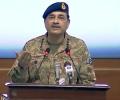
Munir said that the entire nation stands in resolute solidarity with every member of its Armed Forces.
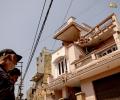
The casualties were reported hours before India and Pakistan agreed to end hostilities, which soared after the Indian Armed Forces hit terror launchpads in Pakistan and Pakistan-occupied Kashmir earlier this week in response to the Pahalgam attack.

The address comes two days after India and Pakistan reached an understanding to stop all firing and military actions on land, air and sea with immediate effect.

Main imports from the neighbouring country during April-January 2024-25 included fruits and nuts (USD 0.08 million), certain oil seeds and medicinal plants (USD 0.26 million), and organic chemicals.
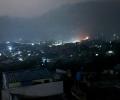
'India has been preparing for the last 15 days... it won't be easy for Pakistan if it tries to dominate escalation.'

India opener Gautam Gambhir called for a complete freeze on ties with Pakistan till the time cross-border terrorism does not end, saying that 'Indian lives are more important than sports'.
'The international community should call upon Pakistan to take sustained, verifiable and irreversible actions against terror outfits operating on the territory under its control'
The NSAB is an advisory body that provides inputs to the National Security Council Secretariat.

Thailand and Cambodia have for the third consecutive day witnessed clashes at the border that left over 30 dead and more than 1,50,000 displaced.
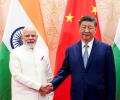
'What's currently underway is not a 'reset'.' 'What needs to be arrived at is a new balance.'

General Rawat also sent a tough message to Pakistan, saying if Islamabad continues to support cross-border terrorism, then the Indian Army can resort to "other actions" too.
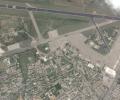
Pakistan's Prime Minister Shehbaz Sharif admitted that India's ballistic missiles hit Nur Khan Airbase and other sites on May 10, a rare acknowledgement that contradicts Pakistan's usual stance of denial when it comes to Indian military action.
He said he completely agreed on the prime minister's statement in the Parliament that Pakistan has to stop cross-border terrrorism.
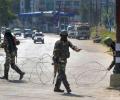
'Pakistan has no locus standi to pronounce on or interfere in matters that are internal to India, including the Indian territories under Pakistan's illegal and forcible occupation'
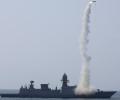
The visuals show the BrahMos anti-ship and anti-surface cruise missiles being launched from a fleet of warships, including Kolkata-class destroyers and Nilgiri and Krivak-class frigates, reaffirming the Navys operational prowess.
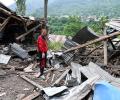
Drones were sighted and explosions were heard in Jammu and Kashmir on Friday, a day after India thwarted attempts by the Pakistan military to attack Indian military installations using drones and missiles. The drones were also engaged in Udhampur and Nagrota of Jammu and Punjab. Heavy cross-border shelling started along the International Border in Suchetgarh and Ramgarh sectors of Jammu and Samba districts. Chief Minister Omar Abdullah appealed to residents to stay indoors and ignore rumors.

It has been reliably learnt that late on Tuesday evening, the Pakistan Cricket Board (PCB) sent another mail to the ICC reiterating the demand to remove Pycroft from all its games but as of now, it hasn't been obliged by the world body.
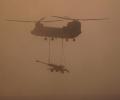
The Indian Air Force will carry out a two-day mega military exercise along the border with Pakistan from Wednesday that will involve all the frontline fighter jets including Rafale, Su-30 and Jaguar aircraft. The exercise is taking place amid heightened tensions between India and Pakistan over the April 22 Pahalgam terror attack that killed 26 people. India's civil aviation authorities have already issued a Notice to Airmen (NOTAM) for the major air exercise that will largely take place along the southern and western section of the Indo-Pakistan border. India's frontline fighter jets including the Rafale, Su-30 MKI, MiG-29, Mirage-2000, Tejas and AWACS (Airborne Warning and Control System) aircraft are set to feature in the exercise.

His comments came hours after External Affairs Minister S Jaishankar arrived in the Pakistani capital to attend the Council of Heads of Government (CHG) summit of the Shanghai Cooperation Organisation.

Hitting out at the report, ministry of external affairs spokesperson Raveesh Kumar said in New Delhi that the update of the earlier OHCHR report is "merely a continuation of the earlier false and motivated narrative" on the situation in Jammu and Kashmir.

India's Air Chief Marshal A P Singh met Prime Minister Narendra Modi on Sunday to discuss the security situation arising from escalating tensions with Pakistan. The meeting comes after a similar briefing by the Navy Chief on the situation in the Arabian Sea. This follows a deadly terror attack in Pahalgam, which India has blamed on Pakistan. India has taken several retaliatory measures, including suspending the Indus Waters Treaty and banning imports from Pakistan.
For Indo-Pak talks to succeed, Islamabad will have to put an end to cross-border terrorism, Antony said, while addressing top army commanders here for their bi-annual conference.

Sri Lankan police searched a flight arriving in Colombo from Chennai after receiving a tip that a suspect linked to the Pahalgam terror attack could be on board. The search was conducted in coordination with local authorities following an alert from the Chennai Area Control Centre. The aircraft was thoroughly inspected and cleared for further operations.

Congress leader Rahul Gandhi visited Poonch in Jammu and Kashmir, offering condolences to families affected by cross-border shelling and encouraging students who lost two classmates to the violence. During an hour-long visit, Gandhi met with students at the convent school that lost the twins, and visited families whose homes were damaged in the shelling.

Yoga is normally linked with India and there are not many formal institutions in Pakistan to teach yoga. Though privately people like the physical part of yoga exercises.

The tragedy struck the family on May 7 when they found themselves in the middle of intense Pakistani shelling at their rented accommodation in Poonch which was badly hit by the cross-border shelling.
The murder of a senior Hamas leader in Dubai is an act of cross-border terrorism that bore the hallmarks of Israel and its intelligence apparatus, a top United Arab Emirates official has said.
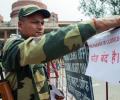
Chawdhary announced this after laying a wreath at the Amar Prahari memorial at the BS Headquarters in Jammu in remembrance of the fallen soldiers.
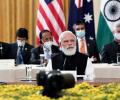
"In all the meetings the Prime Minister had, beginning with US leadership, there was a suo moto recognition of the concerns that Pakistan represents as a country that has in many senses both supported and nurtured cross-border terrorism, including in Afghanistan and from Afghanistan," he said.
